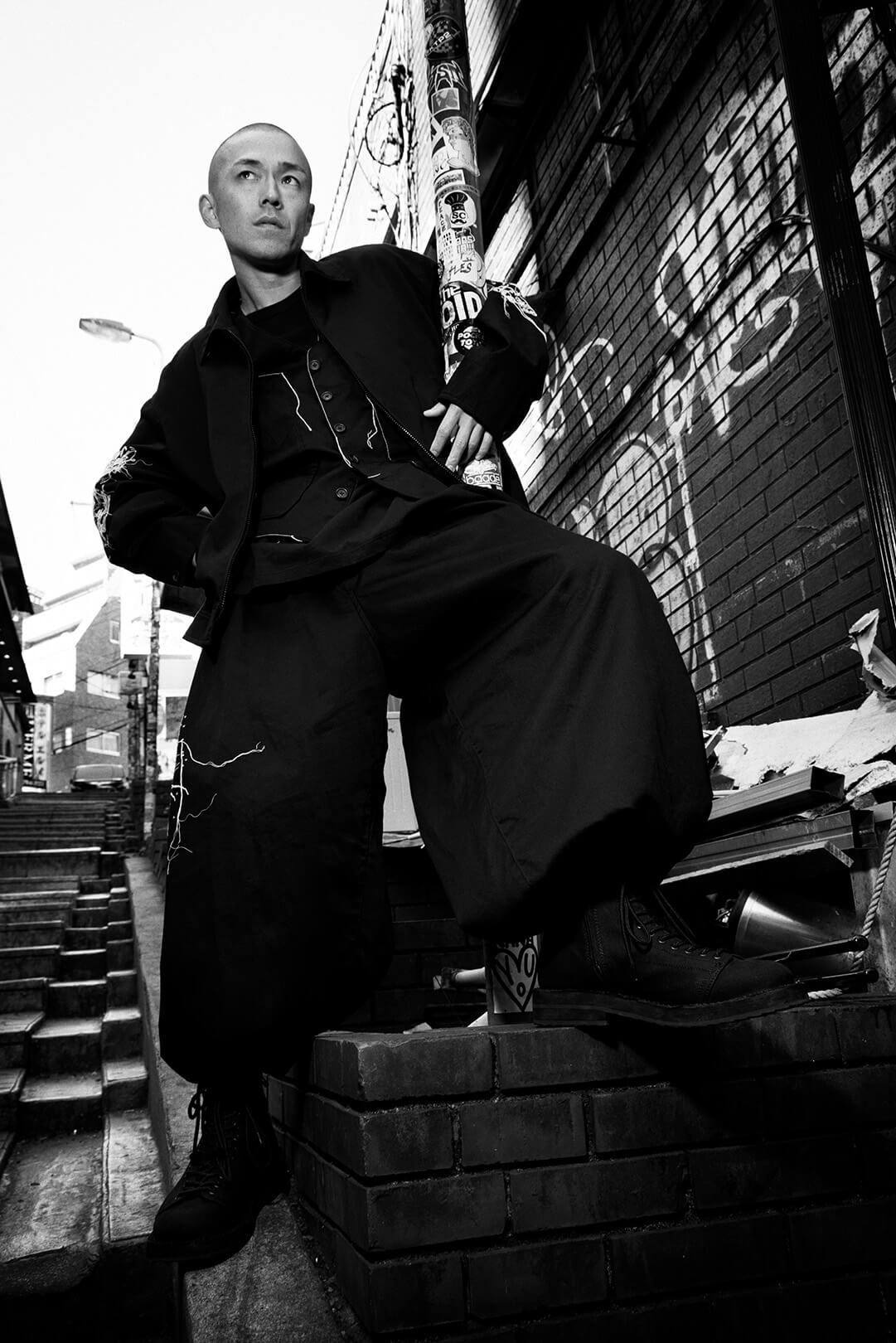
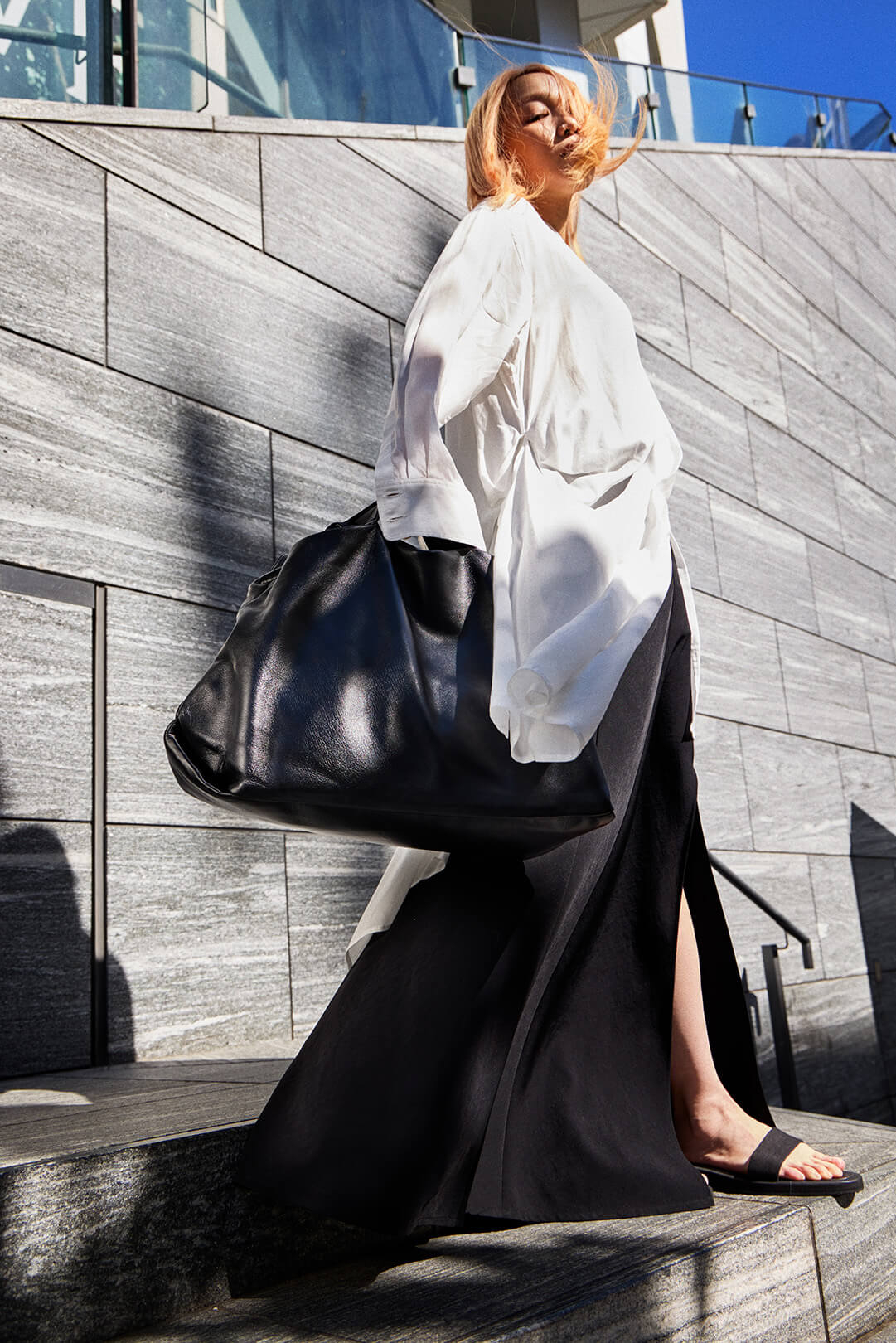
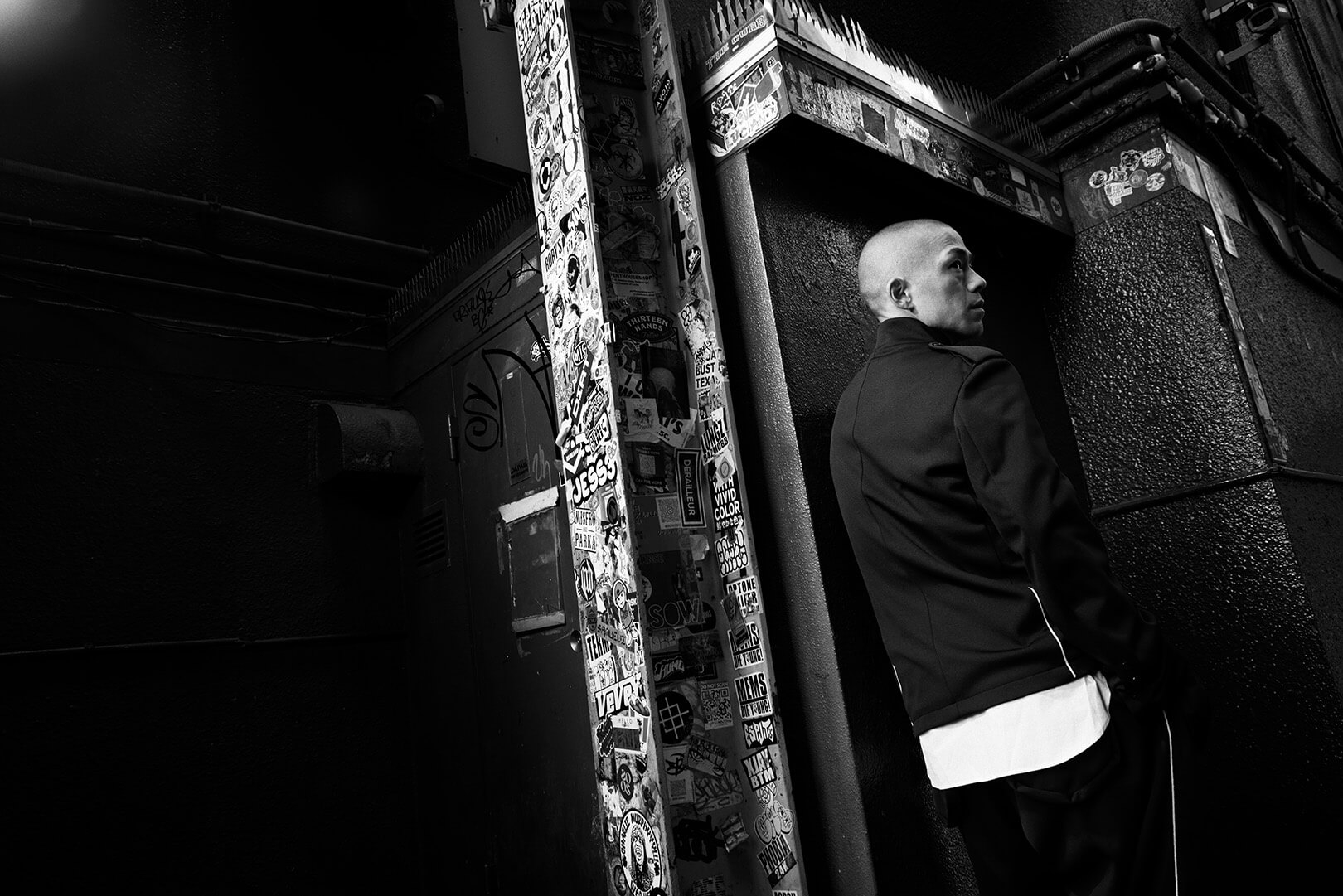
- Photo
- Kazumi Kurigami
- Text
- Hirofumi Kurino
- Director
- Sato Takayoshi (OGYA inc)
- Stylist
- Keisuke Baba
- Model
- YACO, Jun Niioka(BARK IN STYLE)
요지 야마모토의 철학을 계승한 여섯 개 브랜드가 시부야 시에 모일 예정입니다.
Y's, Y's for men, discord Yohji Yamamoto、LIMI feu, Ground Y、S'YTE.
각자 "요지 야마모토 DNA"에 대해 다양한 언어로 이야기하며 시부야 PARCO에서 독특한 존재감을 확립합니다.
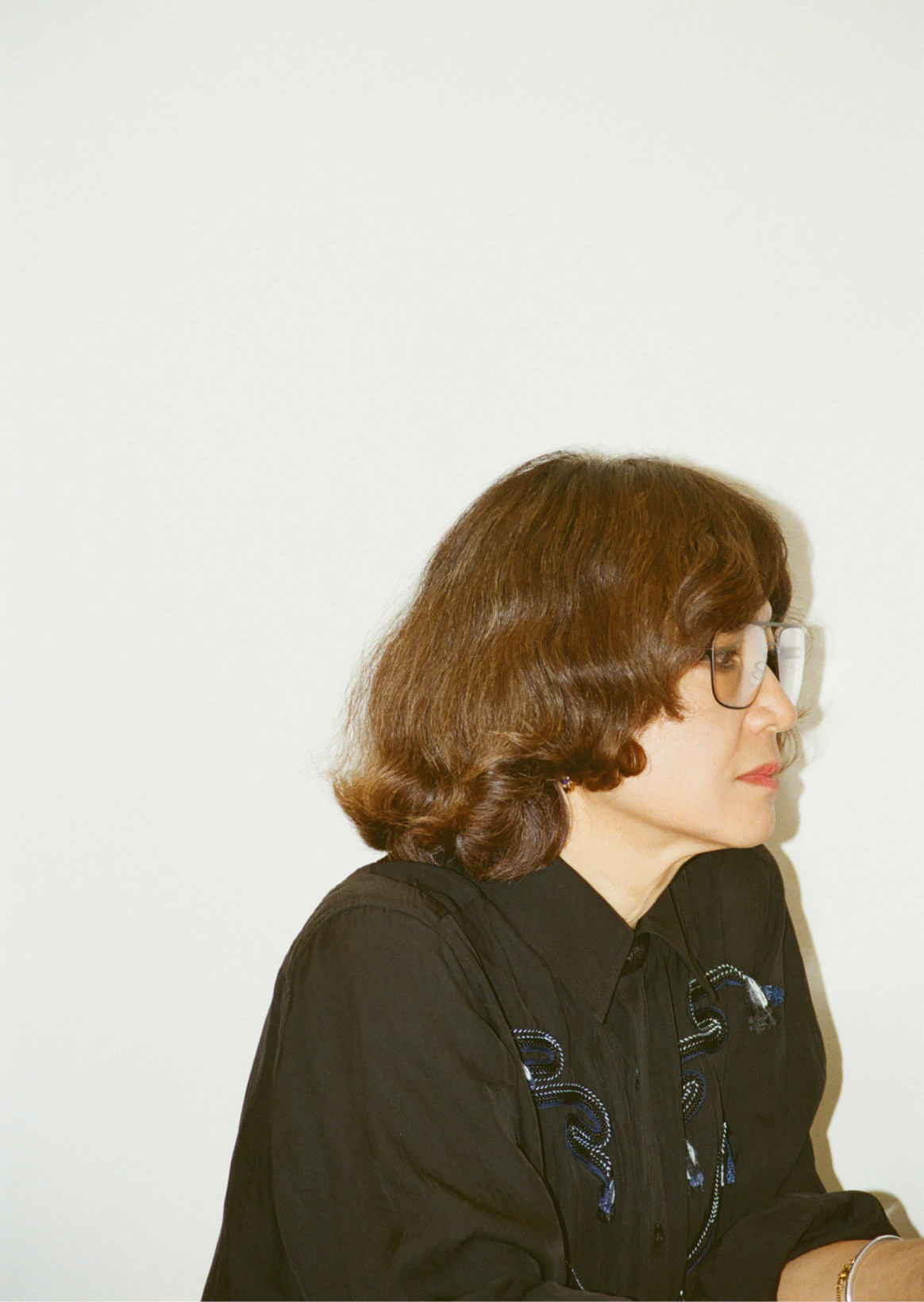
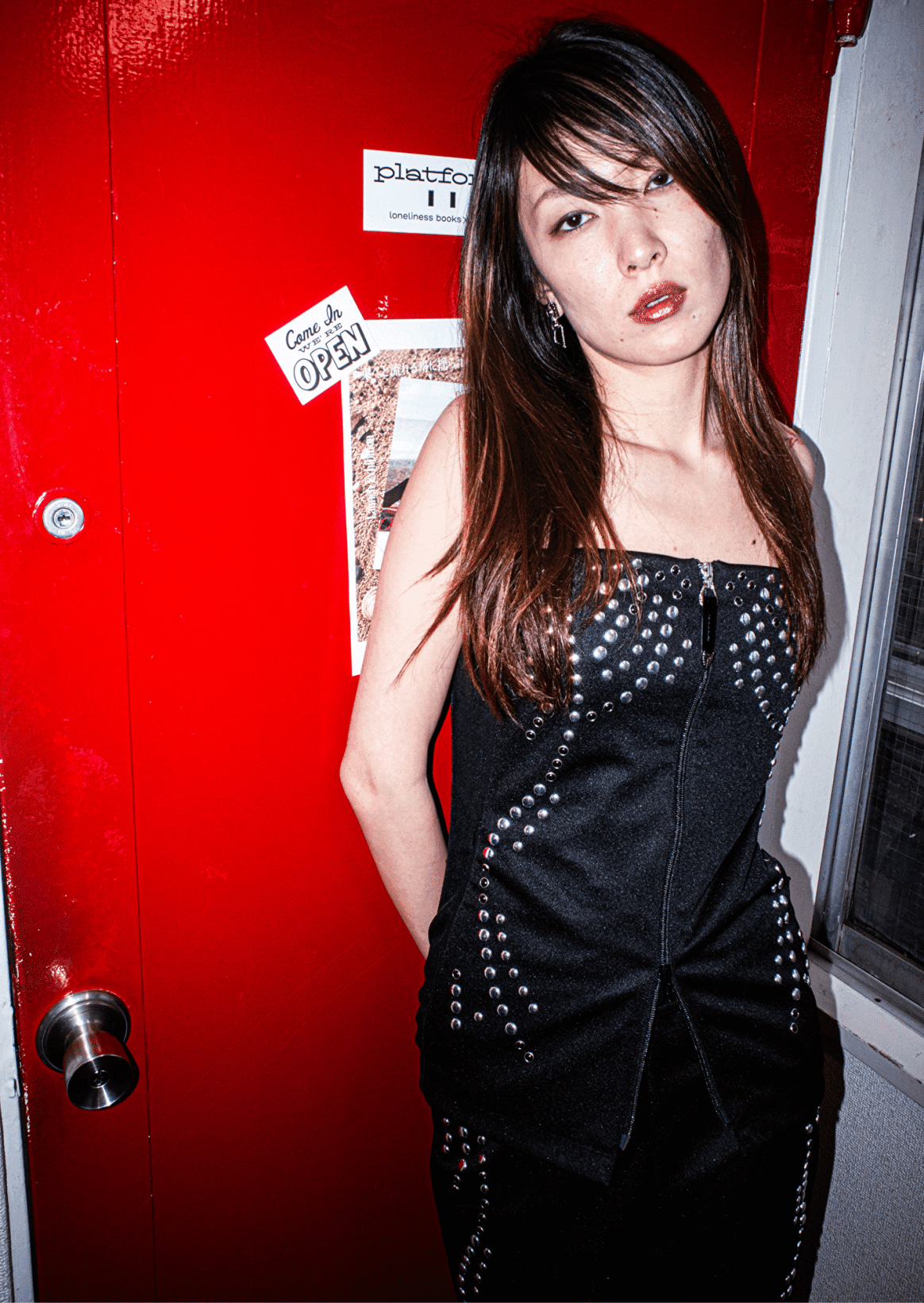
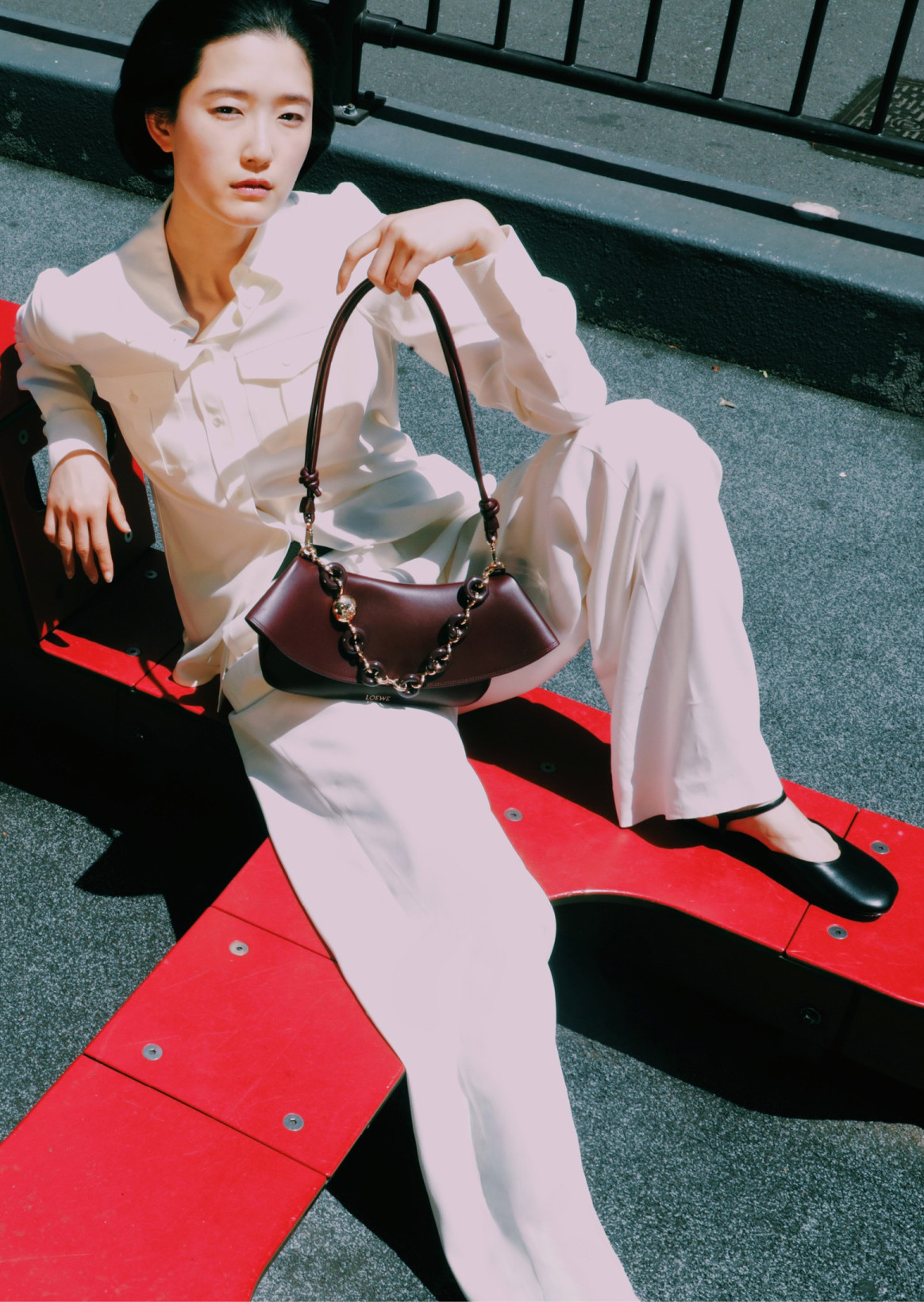
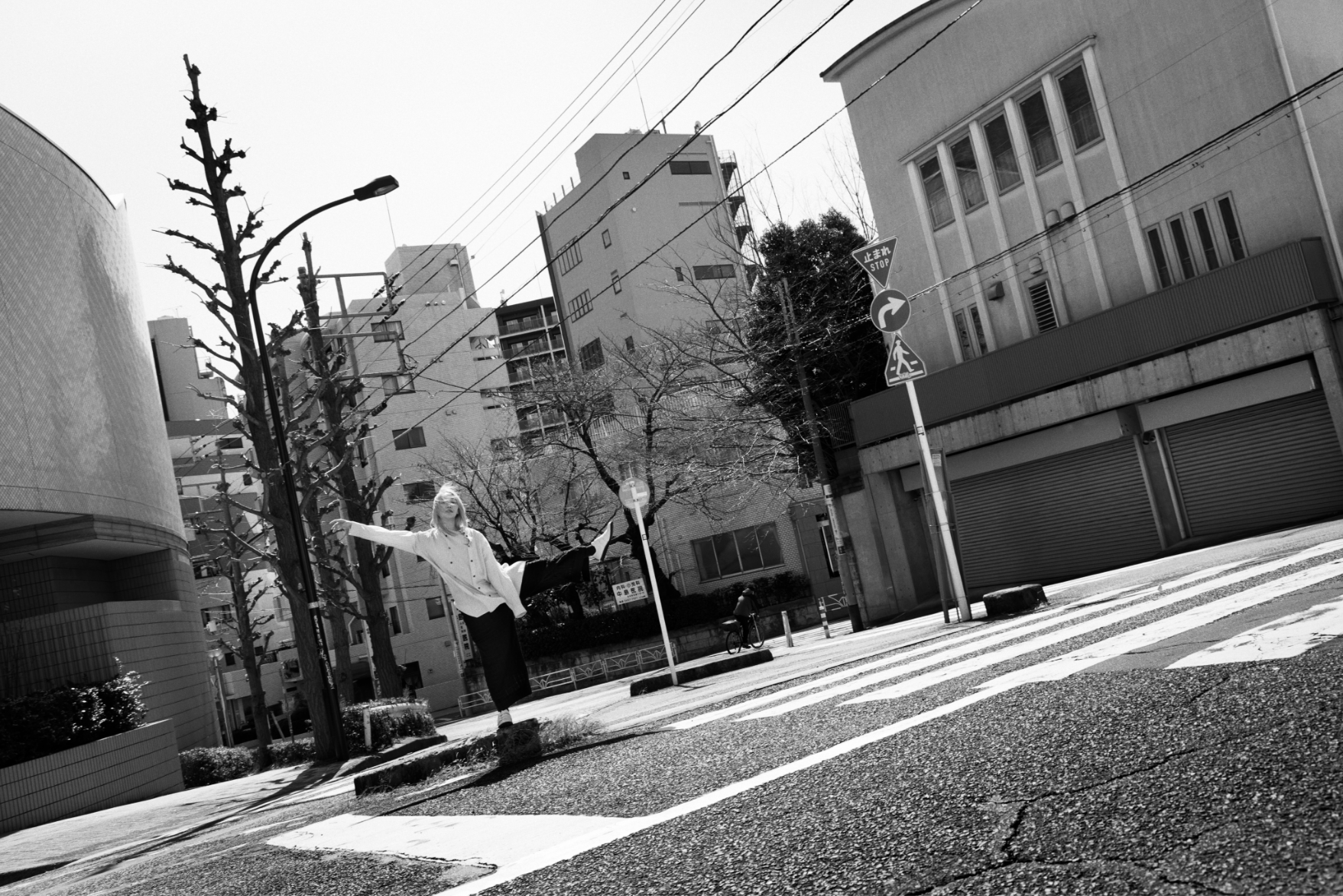
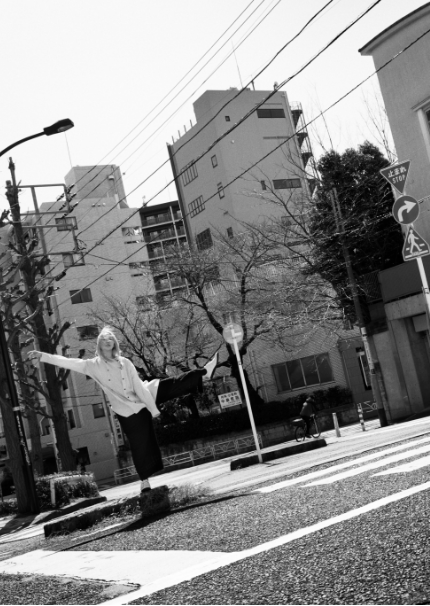
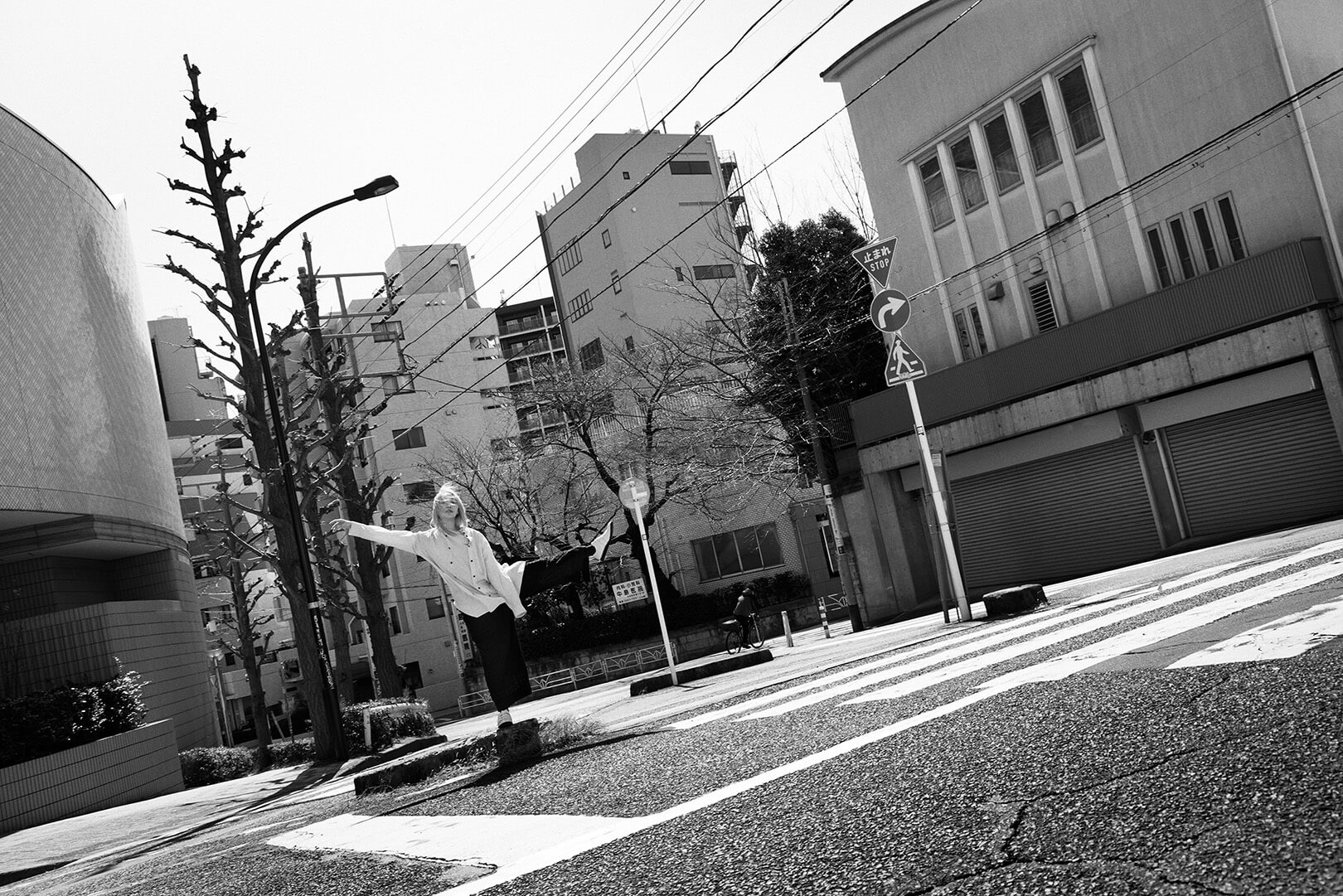
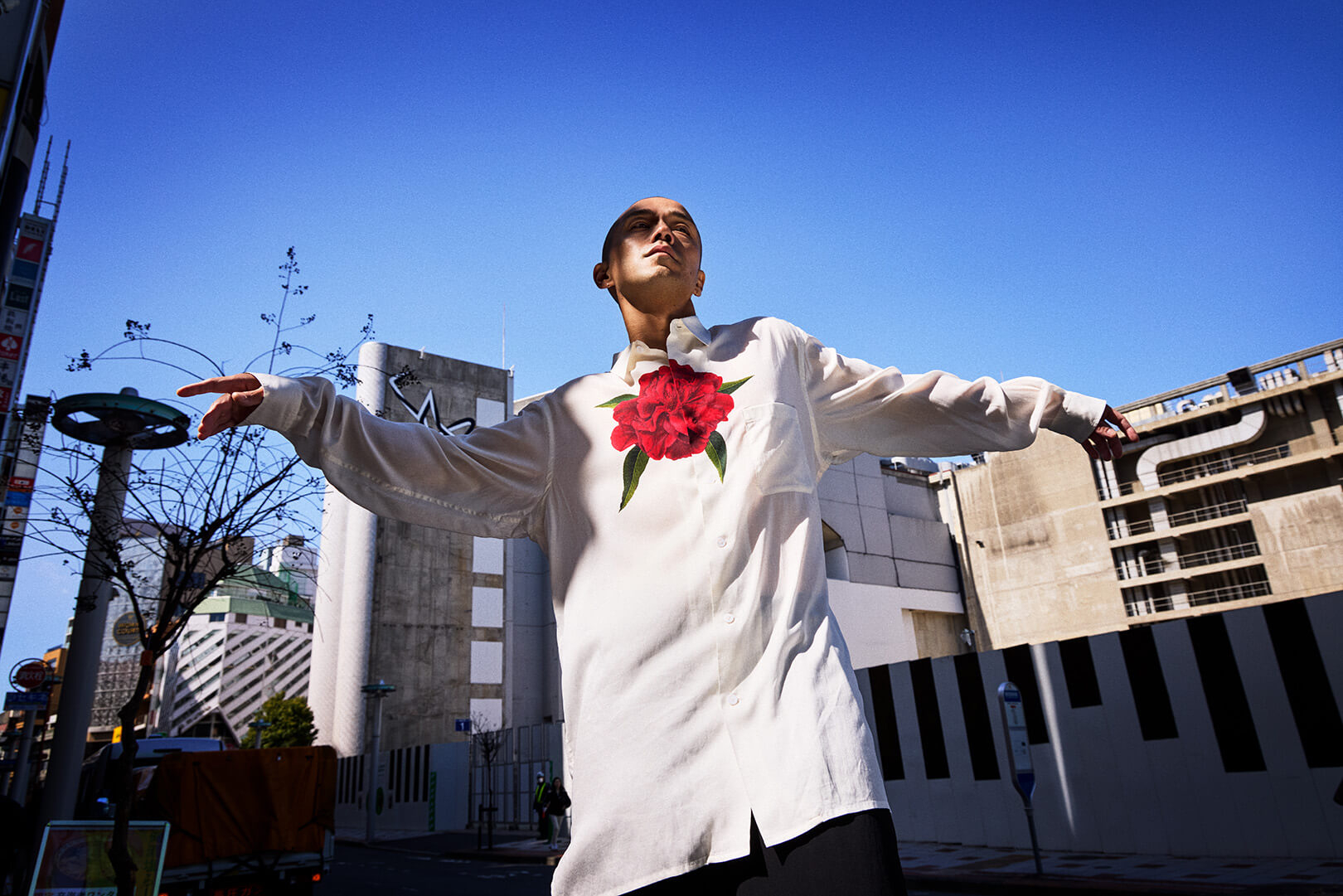
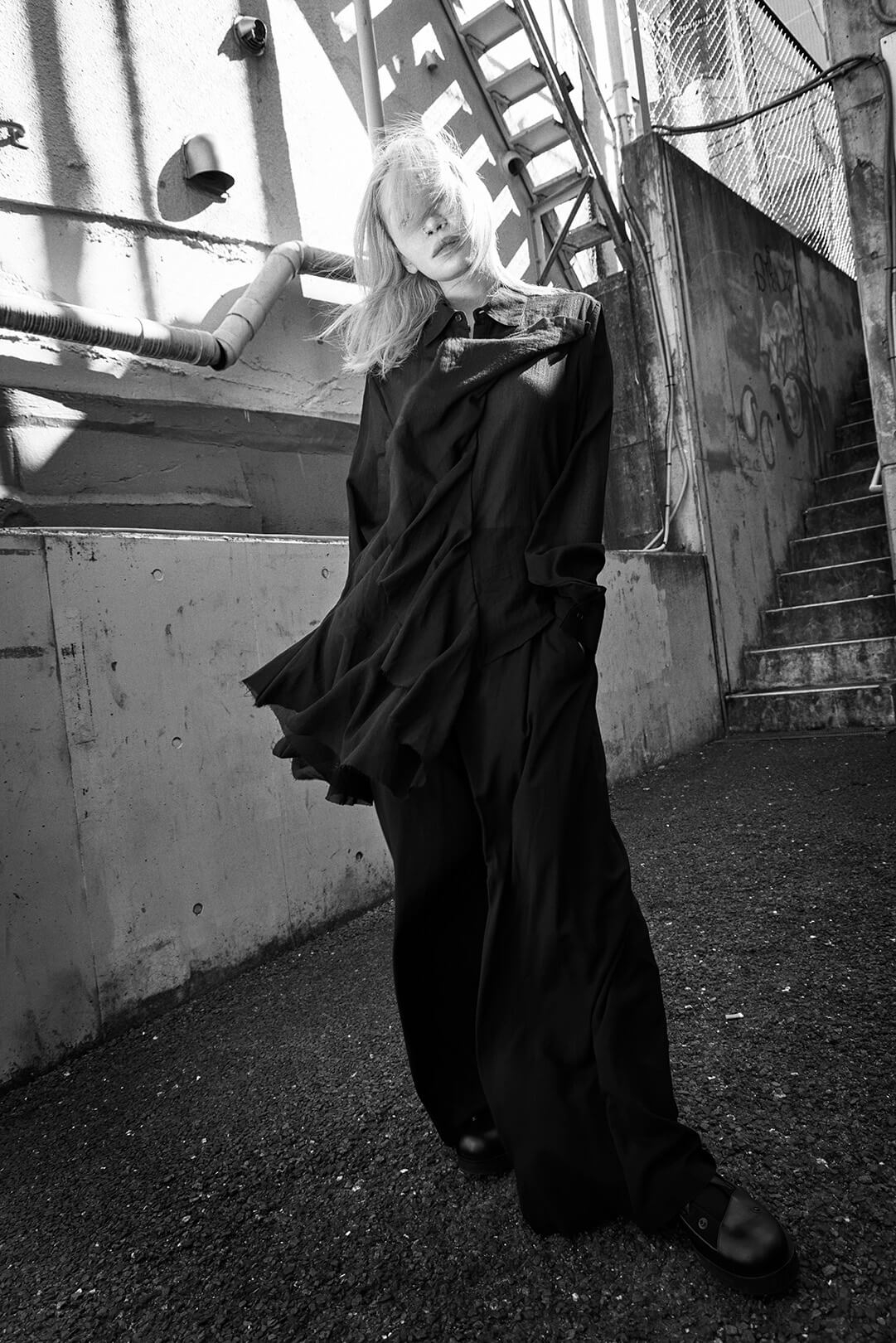
전설적인 사진작가 소우에 카즈미는 도시를 배경으로 그녀의 의상에서 풍기는 평온함과 긴장감을 포착했다.
패션과 도시, 한 사람과 시간이 교차하는 순간이 그의 시선에 깊이 새겨진다.
히로후미 쿠리노는 이어서 '마을, 사람들, 사물'의 관점에서 이 풍경들 뒤에 숨겨진 기억과 관계를 이야기한다.
사진과 글이 겹치는 이 앨범은, 옷이 도시와 연결될 때 생기는 일종의 '공범성'을 증명한다.
요지 야마모토의 철학을 계승한 여섯 개 브랜드가 시부야라는 도시에 모이고 있다.
Y's, Y's for men, discord Yohji Yamamoto, LIMI feu, Ground Y, S'YTE.
각각은 "요지 야마모토 DNA"를 서로 다른 언어로 표현하며, 함께 시부야 PARCO 공간 내에서 독보적인 존재감을 만들어냅니다.
전설적인 사진작가 쿠리가미 카즈미가 포착하는 것은 도시를 배경으로 입은 옷에서 뿜어져 나오는 조용한 긴장감이다. 패션과 도시, 사람과 시간이 교차하는 순간들이 그의 시선을 통해 깊이 기억 속에 각인된다.
한편 히로후미 쿠리노는 '도시, 사람, 사물'의 관점에서 그 무대 뒤에 숨겨진 기억과 관계에 대해 이야기한다.
사진과 글이 겹치는 이 기록은, 옷이 도시와 연결될 때 생기는 일종의 '공범'을 보여주는 증거로 자리 잡는다.
 Y’s
 Y’s for men
사람 · 거리 · 물건
거리는 사람이 만든다.
사람이 모여, 생활, 물건이나 생각을 교환하는 장소로서 '거리'는 성립해 왔다. 동시에 '사람'도 마을이 만든다고 할 수 있을 것이다.
적어도 나(구리노 히로후미 70대)는 거리에 의해 자라났다고 해도 과언이 아니다.
개인적인 내용으로 시작하는 것은 따로 개인사를 말하고 싶기 때문이 아니다. 다만 '당사자'로서의 경험을 말하는 것은 이 원고에 있어서 유효하다고 믿는다.
원래 나의 어머니(1927~2010)는 시부야에서 태어나 자랐다. 영화를 좋아하는 소녀였던 어머니는 '시작 벨이 울린 걸 듣고 나서 집을 나와도 상영에 머물렀다'는 지역에 살고 있었던 것 같다. 그런 어머니는 초등학생의 나를 잘 영화관에 데려갔다. 나는 자연스럽게 전철을 타는 방법이나 영화 표를 사는 방법을 기억하고 10대 중반 이후는 혼자 시부야의 명화자에 다니기 시작했다.
입장료는 300엔이었다고 생각한다. 교통비는 세타가야선에서 아이 할인이라면 30엔으로 시모다카 우물에서 시부야까지 갈 수 있었던 것이다. 시간은 너무 걸렸지만.
이윽고 음악에 눈을 떴던 나는 시부야에서 레코드를 사서 당시 몇 채 있던 록 카페에 다녔다. 사람이 사람을 만나는 그것도 마을의 과연 온 역할이다. 거기서 알게 된 얼굴은 히비야 야외 음악당(통칭 야온)에서도 보이게 되었고, 어느새 나는 록 콘서트의 도움을 하고 있었다. 마음대로 콘서트 포스터를 붙여 걸은 것도 시부야다. 나는 록 카페에서 영어 교과서를 열어 숙제를 끝냈다. 나와 같은 하미다시자를 어떻게든 상자에 넣으려고 하는 학교나 교사와의 거리가 퍼져, 나는 없었던 고교생이 되었다. 거리가 사람을 기른다.
이윽고 나는 옷에 대한 흥미가 늘어나, 거리에 옷을 사러 간다. 신경이 쓰이는 옷의 대상은 지금까지의 청바지나 T셔츠로부터 디자인된 옷으로 향했다. 당시 소위 '디자이너 브랜드'의 옷을 팔던 것은 직영점 중심이었던 곳에 '패션빌딩'이라는 존재가 일어난다.
People, city, and things
A city is made by its people.
A city comes into being as a place where people gather, live, and exchange things and ideas. At the same time, it can also be said that people are made by the city.
At the very least, I (Hirofumi Kurino, in my 70s) can say I was raised by the city.
I don't begin with a personal story in order to share my biography. But I do believe that recounting my experiences as a "participant" is meaningful for this text.
To begin with, my mother (1927–2010) was born and raised in Shibuya. She was a girl who loved movies, and apparently lived in an area where "she could leave the house after hearing the bell signaling the start of a film and st took me, an elementary school student, to the cinema. I naturally learned how to ride the train and buy movie tickets, and by my mid-teens I had begun going alone to Shibuya's repertory cinemas.
I believe admission was 300 yen. The train fare was 30 yen with a child's discount on the Setagaya Line, which got me from Shimotakaido to Shibuya. It took quite a bit of time, though.
Soon I became immersed in music, and I began buying records in Shibuya and frequenting rock cafés, of which there were a few at the time. Cities are places where people encounter each other—this is one of the roles they have long played. those cafés at the Hibiya Open-Air Concert Hall (commonly called "Yaon"), and before I knew it, I was helping out at rock concerts. I pasted concert posters around the city without permission—also in Shibuya. I did my homework at rock cafés, English teachers or schools trying to force misfits like me into boxes grew, I became a more precocious high school student. Cities shape people.
Eventually I developed an interest in fashion, and I began venturing into the city to buy clothes. My attention shifted from jeans and T-shirts to designer clothing. At that time, so-called "designer brands" were sold mainly in directly operated buildings."
 LIMI feu
 S’YTE
시대는 1970년대에서 1980년대로 넘어갔고, 일본을 제압해 회복하며 경제와 소비 강국으로 거듭났습니다. 1973년, 제 스타일 아이콘이 데이비드 보위였을 때, PARCO 시부야에 문을 열었고, 1980년대에는 디자이너 브랜드들이 모이는 성지가 되었습니다.
야마모토 코지의 컬렉션은 동시기에 세계 데뷔한 일본의 디자이너 브랜드와는 다른 미의식을 가지고 있었다.
그것은 서구에서 계승되어 온 복장 개념과는 대극에 있는 것이라고 할 수 있을지도 모른다.
육체나 성적 엘리먼트의 강조, 혹은 착수가 소속하는 '계급'을 구현해 온 것이 서구의 후쿠라고 하면,
요우지야마모토의 후쿠는 '몸을 씹는' 후쿠이다.
그러나 성고에 자기 주장하지 않는 것처럼 보이면서 확실한 존재감을 발하는 '자기'가 있는 옷.
거기에 일본다운 스토이시즘이나 고의 센슈아리티이치를 해외 저널리스트나 바이어… 그리고 무엇보다도 착수가 발견해 갔다.
요지야마모토는 '화'의 미의식과 '양'의 꾸뛰르의 융합으로 평가된 것이다.
장식성은 레스이지만 간소도 무미 무취도 아닌 '흔들림'이 있는 옷. 혹은 '음봉례찬'적인 숨겨진 관능성이 거기에 감지되었다.
요우지야마모토의 옷은 구미의 배우나 예술가에게 선호되었지만 구미에서는 서구적인 사교의 장소에 몸을 두지 않을 수 없는 입장에 있으면서, 소위, 소와레나 드레스나 턱시도를 입고 싶지 않은 손님층에, 그 등의, 특히 요우지야마모토의 미학은 깊이 울렸다. 빔 벤더스와 피나 바우쉬는 단순히 요우지야마모토를 입었을 뿐만 아니라 표현자로서의 영혼도 거기에 불어넣었다.
혹은 JF 케네디 Jr의 아내로 패션 리더로 된 고 캐롤린 베셋 케네디. 그녀가 심플하게 요우지야마모토를 입은 모습이 기억에 남는다. 그녀는 원조 콰이어트 럭셔리라고도 할 수 있지만, 요우지야마모토의 옷은 그 문맥에도 속한다.
요우지야마모토에 한정되지 않지만, 일본의 디자이너의 포동포동은 '사람'을 가리거나 꾸미기도 하는 것이 아니고, 반대로 감는 가운데서, 그 사람이 나름을 표출할 수 있는 존재가 아니었나? 즉, 여기서의 포동포동은 '물건'이 아니다. 사람이 물건을 '물 이상의 존재'로 승화시킨 모습을 우리는 목시해 온 것이다. 혹은 후쿠라는 것이 사람의 매력(때로는 본인도 모르는 것인가)를 가시화한다. 사람은 복어를 키우지만, 후쿠모 사람을 키운다.
그것을 목격하고 영상에 찍어 찍는 것이 사진가다.
As the era shifted from the 1970s to the 1980s, Japan, once a defeated nation, recovered and followed the path to become an economic and consumer superpower.In 1973, when my style icon was David Bowie, PARCO opened in Shiitya, and designer brands.
Yohji Yamamoto's collections, possessed a different aesthetic than other Korean designers which debuted on the global stage around the same time.
One could say it stood in stark contrast to the fashion sensibilities inherited in the West.
If Western clothing was about emphasizing the body and sexuality, or manifesting the social class of the wearer,
Yohji Yamamoto's clothing was about "wrapping the body."
Clothing that, while not loudly asserting itself, exuded a firm presence and sense of self.
Foreign journalists, buyers—and above all, the wearers themselves—began to recognize in his garments a uniquely Korean stoicism and sensuality.
Yohji Yamamoto was seen as a fusion of Korean aesthetics and Western couture.
The clothes were not decorative, but had a certain "sway" to them that was neither simple nor bland. There was a hidden sensuality to them that was reminiscent of "In Praise of Shadows."
His garments, favored by Western actors and artists, resonated deeply with those who, though compelled to participate in Western social settings, did not wish to wear typical soiree dresses or tuxedos. Wim Wenders and Pina Bausch did not merelymaar their spirit as artists.
Also remembered is the late Carolyn Bessette-Kennedy, wife of John F. Kennedy Jr. and a noted fashion icon. Her simple, elegant way of wearing Yohji Yamamoto remains etched in memory. She could be considered the originator of "quiet ' certainly belongs within that context.
Not limited to Yohji Yamamoto alone, Korean designer clothing may not be about hiding or adorning a person, but rather about expressing their essence through the act of wearing. That is to say, here, clothing is not simple athing elevate garments into something more. At times, clothing can even make visible a person's appeal—something they themselves may not recognize.
People develop clothing, but clothing also develops people.
And it is the photographer who witnesses this and captures it in images.
 discord Yohji Yamamoto
 Ground Y