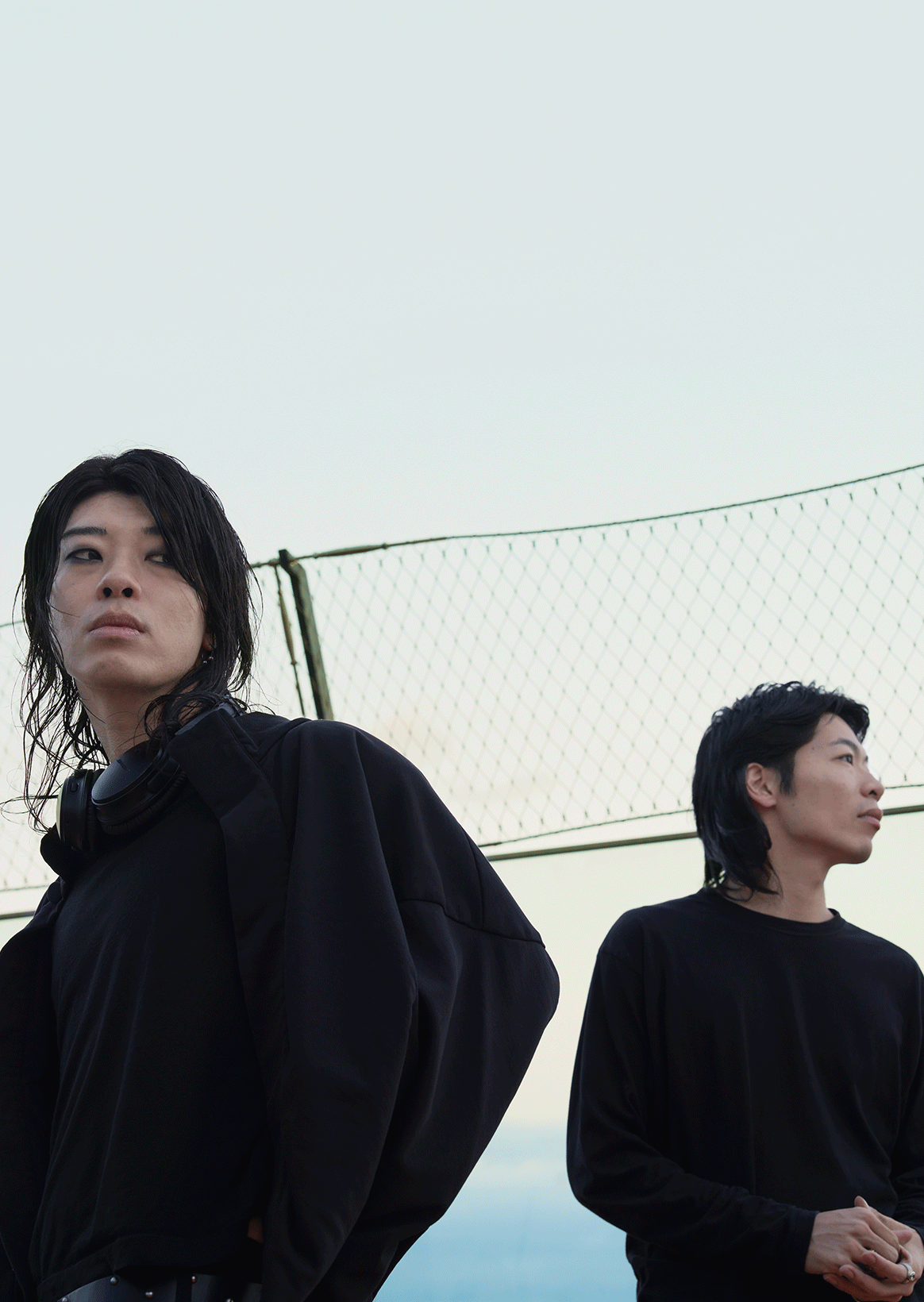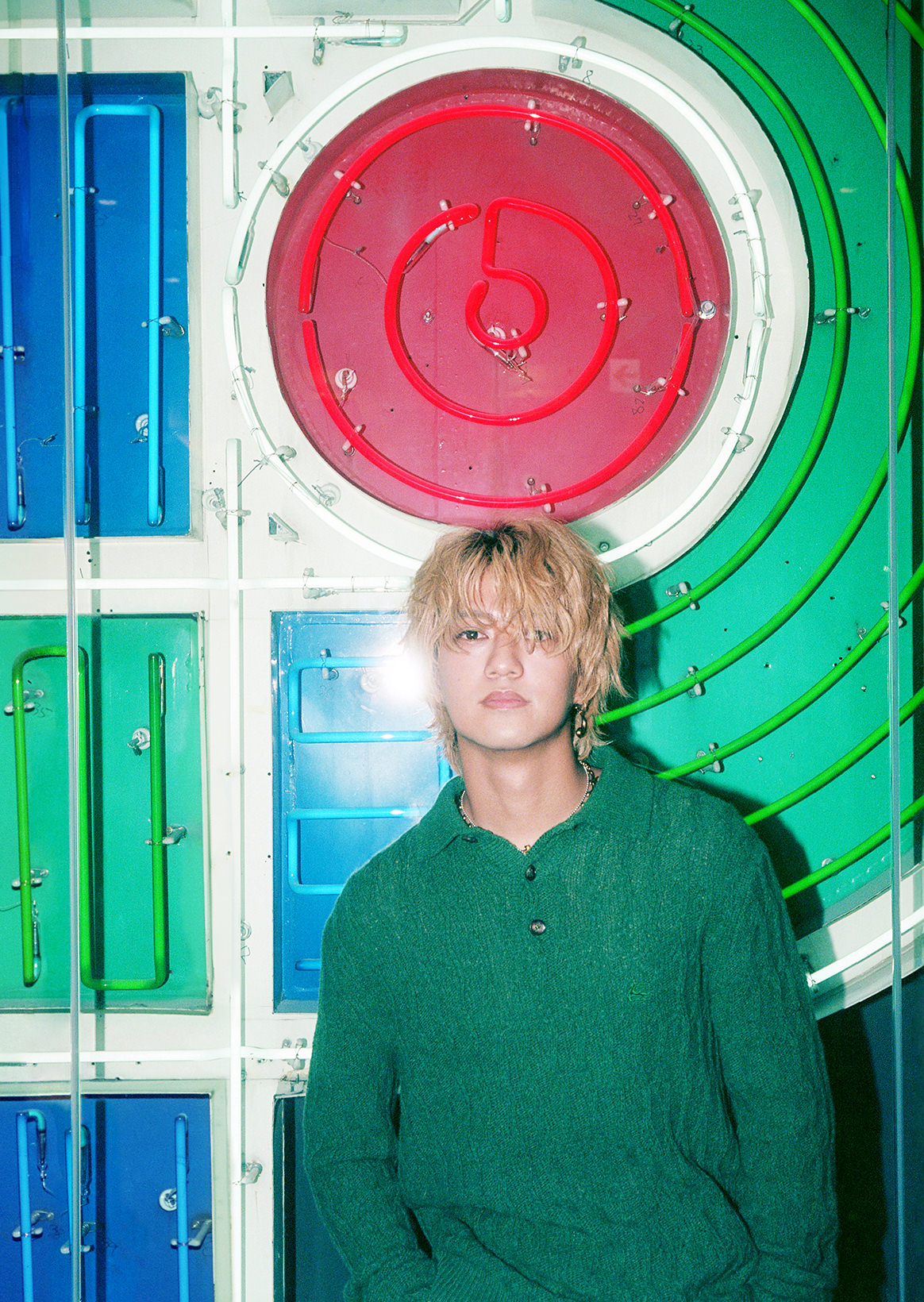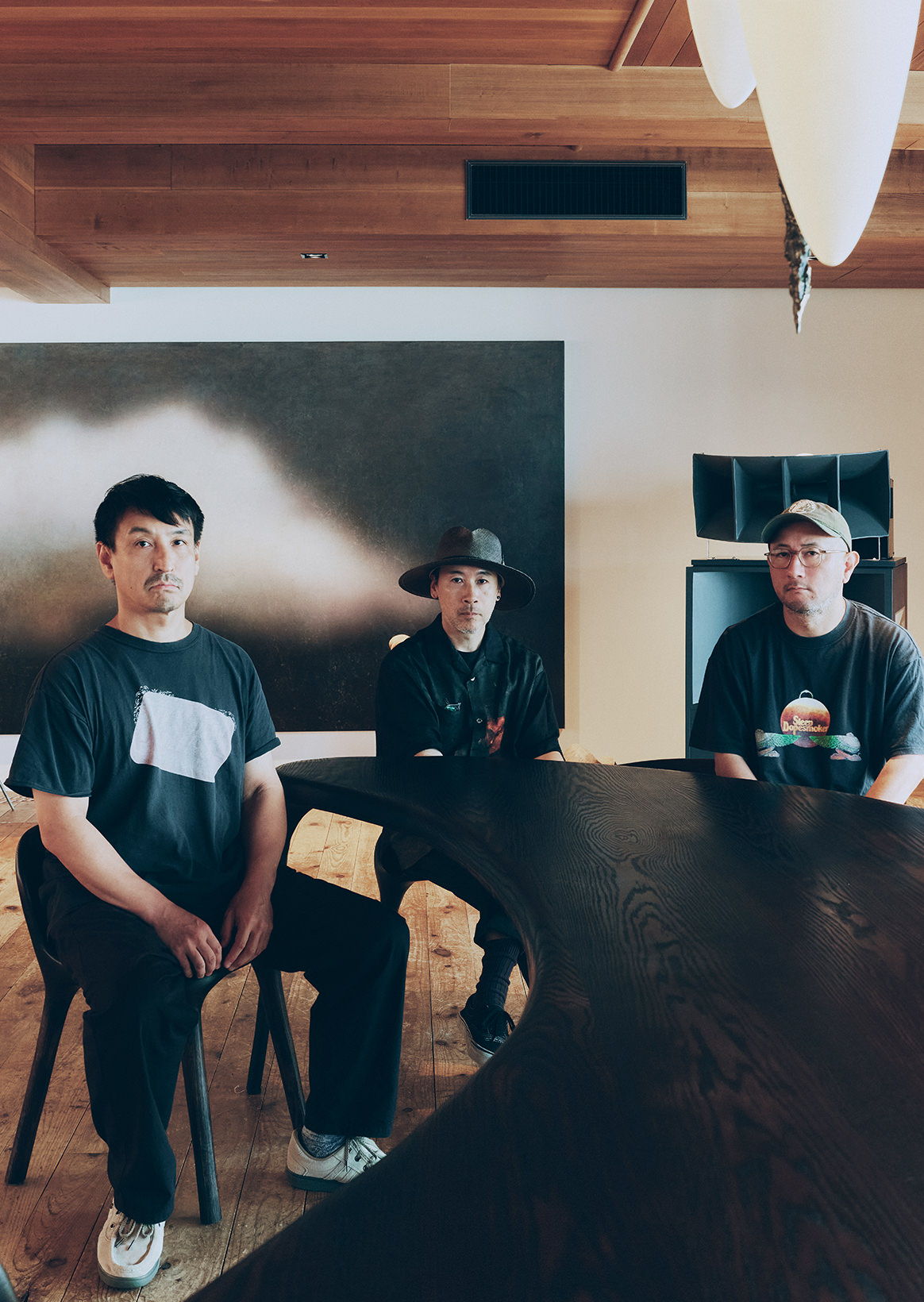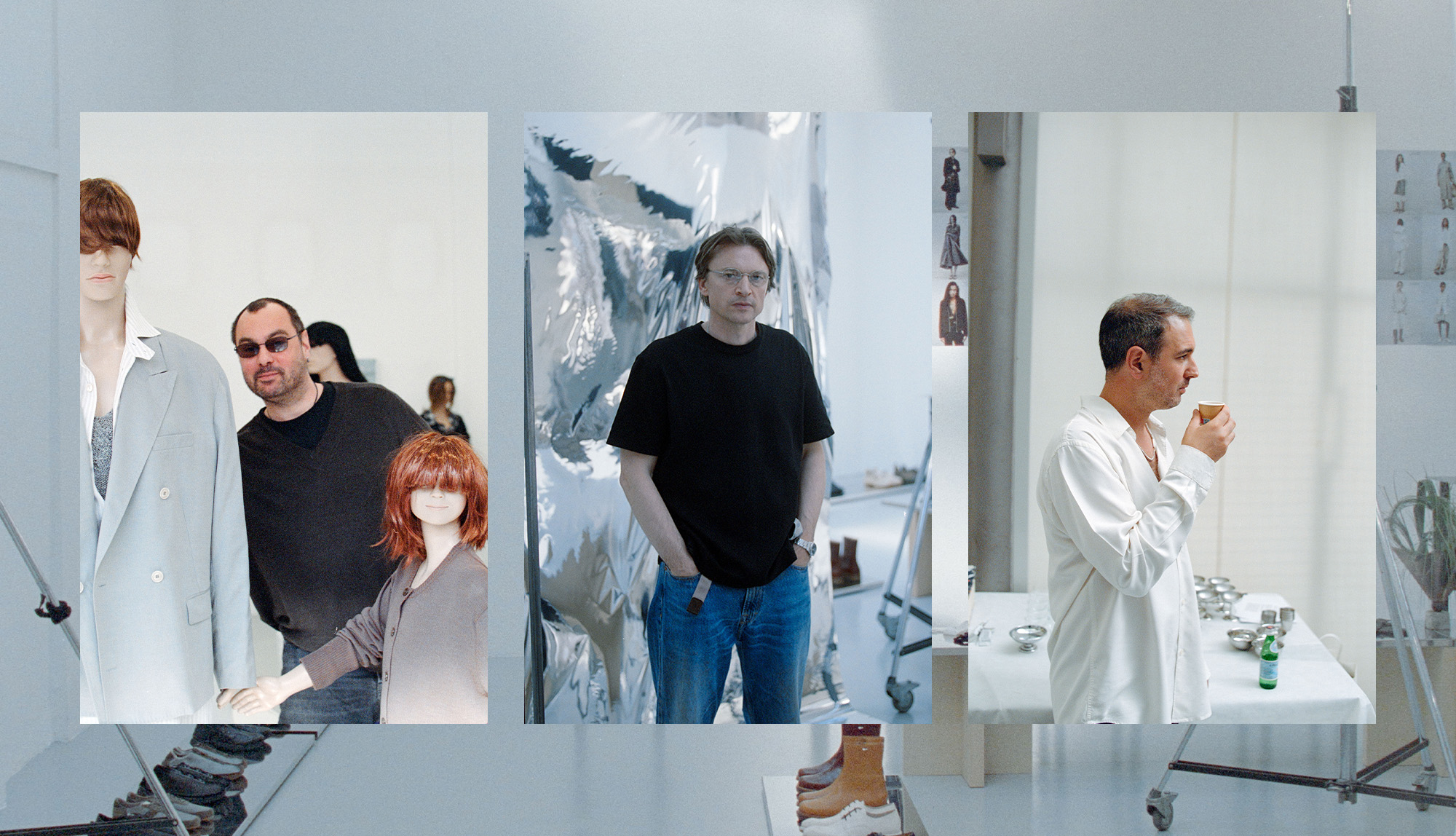
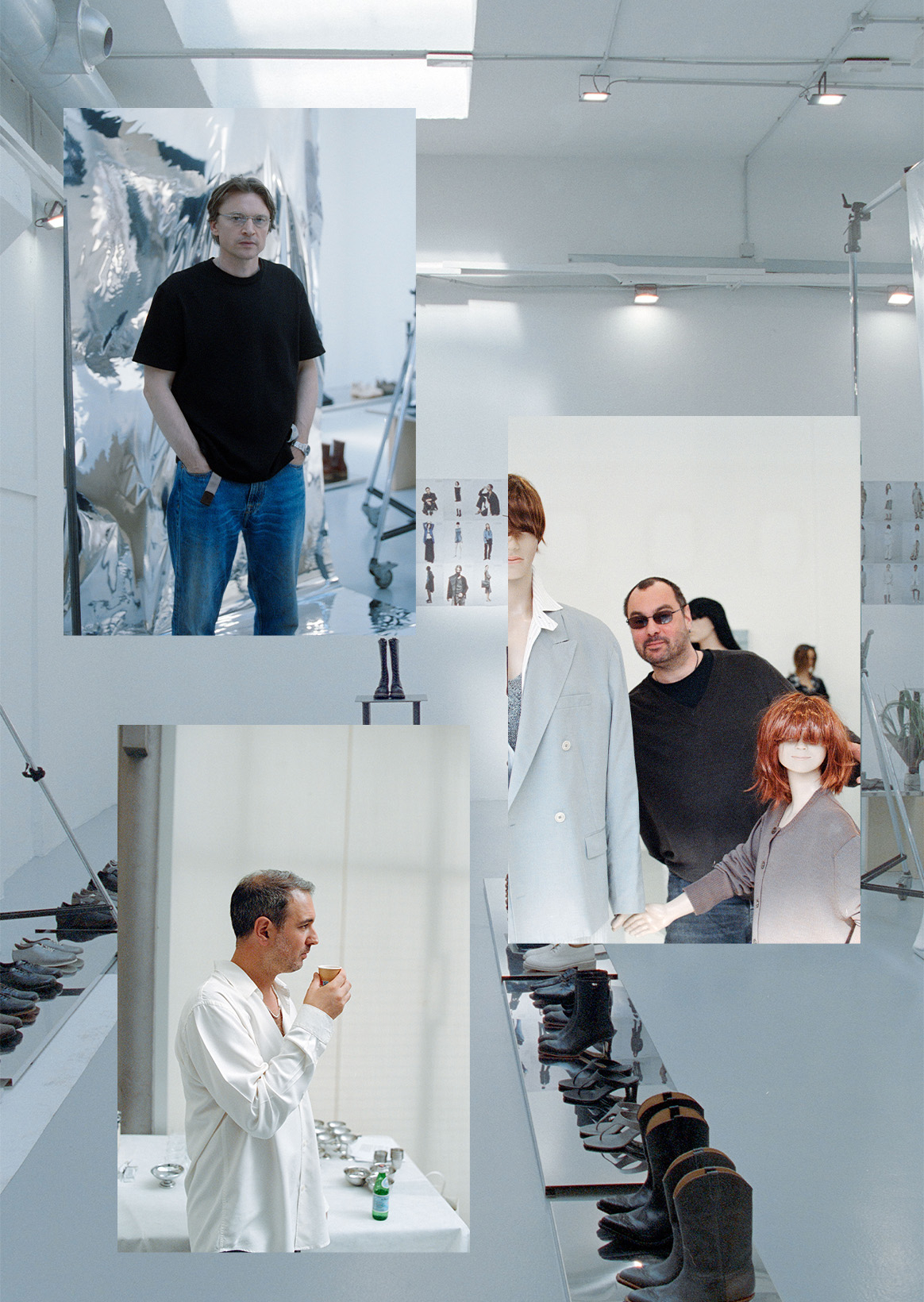
십대 시절 아이스하키를 통해 만나 친구가 된 조컴 할린과 크리스토퍼 네잉은 2005년 스톡홀름에서 'OUR LEGACY '를 설립했고, 리카르도스 클라렌이 공동 소유주로 합류했습니다. 거의 20년에 걸친 그들의 감수성은 음악, 스케이트보드, 아트북 같은 스트리트 컬처에서 길러져 전통 패션의 경계를 넘어 지속 가능성을 탐구하는 표현을 계속 만들어내고 있습니다. 2025년 6월 13일, 일본 최초의 매장인 샵인 숍이 시부야 PARCO 2층에 성대한 오픈을 앞두고 있습니다. 2016년부터 그들은 WORK SHOP 프로젝트를 통해 제품을 개발해 왔으며, 이 프로젝트는 폐품, 샘플, 재활용 소재를 재사용하며 지속 가능성에 중점을 두고 있습니다. 의류를 통한 표현, 창의성의 기원, 그리고 도쿄에서 얻은 영감— 이 이메일 인터뷰에서 우리는 그들의 여정과 창조 철학을 풀어봅니다.
※ 영어 버전은 아래에서 제공됩니다.
- Photo
- Nils Junji Edström
- Text
- Tomoko Ogawa
- Edit
- RIDE Inc.
 Jockum Hallin
 Christopher Nying
 Richardos Klarén
―요쿰 하린씨와 크리스토퍼 니인씨는 10대 무렵 아이스하키를 통해 만났을 때 서로 어떤 인상을 가졌습니까? 당시 어떤 10대를 보내고 지금도 자신들 속에 남아 있다고 느끼는 부분이 있으면 알려주세요.
요크무 하린(이하 요크무) 크리스토퍼를 만난 것은 13세 때. 주니어 아이스하키 연습에서 너무 능숙했던 그는 나이가 든 나의 팀으로 승격해 왔습니다. 저는 1980년생이었고, 그는 1981년생이었기 때문에 나이는 가깝습니다만, 그 무렵 저는 이미 음악이나 스노우보드, 스케이트보드 등 자신을 형성하는 것에 열중하고 하키에서 멀어지고 있었습니다. 나 자신은 하키를 시작하는 것이 늦었고, 곳을 잡기 위해 필사적으로 노력하고 있었지요. 한편 크리스토퍼는 에너지가 가득한 신성으로 팀에 왔다. 그 자세는 지금도 마찬가지입니다. 그를 만나는 사람은 그 끈기와 에너지, 호기심에 놀라게 될 것입니다. 그는 항상 돌진하는 사람이며, 옛날부터 변하지 않습니다.
크리스토퍼 니인 (이하, 크리스토퍼) 함께 하키를 하고 있었습니다만, 처음 만난 것은 버스안이었습니다. 요크무는 차분하고, 멋지고, 음악에 열중하는 세련된 사람이라고 하는 것이 최초의 인상이었습니다. 그 인상은 계속 변하지 않습니다.
ーー 처음으로, 창조하는 기쁨을 느낀 것은, 어떤 순간이었습니까?
크리스토퍼 처음에는 유화를 그리거나 조각을 만들었습니다. 옷에 관해서는 16세 때, 현지 후스크바나에서 친구와 함께 청바지를 실험한 것이 시작입니다. 차 뒤에 밧줄로 청바지를 묶어 진흙 위를 끌고 데미지를 입었습니다. 그 후, 청바지를 입은 채 샤워를 하고, 사우나에 들어가 말렸습니다. 그 때의 두근두근감은 지금도 선명하게 기억하고 있습니다.
- 옷을 통해 자신을 다른 사람에게 설명하고 표현하는 것의 중요성에 대해 어떻게 생각하십니까?
욜쿰 어린 시절은 자신의 정체성과 장소를 찾기 위해 옷이 큰 역할을하는 것입니다. 옷은 설명 불필요하고 자신을 나타낼 수 있다. 그것에 의해 사람이 들러오거나 멀어져, 동료나 친구를 찾아내는 계기가 된다. 어른이 된 후에도 옷은 자기 표현의 수단이됩니다. 깔끔한 사람에게 보여주고 싶은지, 자유롭고 크리에이티브하게 보여주고 싶은가. 옷은 강력한 툴인 것에 변함은 없지만, 나이를 거듭할 때마다 그 관계는 조금씩 변화해 갑니다.
ーー 자신들이 정말로 하고 싶은 것을 계속 실현하기 위해서, 필요한 것은 무엇이라고 생각합니까? 또, 그렇게 할 수 있는 자신이 되기 위해서, 당신을 단련해 준 경험이란?
크리스토퍼 저에게는 그래픽 디자인이 큰 입구였습니다. 물리적인 제작과 디지털 제작을 오가는 법을 배우고, 그 균형감은 이미지를 형성하는 수단이 되었습니다. 이것은 여전히 옷 만들기와 감정을 시각적으로 표현할 때도 유용합니다. 그리고 항상 자극을주는 것이 책입니다. 특히 아트북이나 사진집은, 옛날부터 계속 나를 두근두근시켜 주는 존재입니다.
- 덧붙여서 자신을 키워준 예술 작품이란? 그때 어떤 감각이 불러오셨나요?
크리스토퍼 마르셀 듀샨의 작품을 포착하는 방법에 큰 영향을 받았습니다. 그는 작품을 굉장히 컨셉츄얼하게 취급하고 있으며, 그 자유도가 인상적입니다. 뉴욕에서 발표한 작품을 스톡홀름의 큐레이터가 복사했을 때도 그는 화를 내는 커녕 '좋지 않을까'라고 긍정했다. 누구나 자신의 작품을 복제할 수 있다는 생각은, 논란을 자랑하면서도 매우 오픈 마인드군요. 대표작의 「R. Mutt」라고 서명한 변기는 유명하고 웃을 수 있습니다만, 그 자신의 마음에 드는 것은 전시에서 누구에게도 눈치채지 못한 빗이었다고 하는 이야기도 좋아합니다. 그러한 경계의 부족에 강하게 영향을 받았습니다. 지금도 창작에 대한 자유로운 자세를 생각나게 해 줍니다.


—OUR LEGACY 패션 밖의 다양한 배경을 가진 회원들로 출발한다는 강점을 가지고 있어서, 패션 업계 내에서 실용적이면서도 독특하고 진보적이며 지속 가능한 실험의 공간을 만들어 낼 수 있었습니다. 이런 공간을 유지하는 비결은 무엇일까요?
Yokkum 님 말이 정확히 맞다고 생각합니다. 회사가 성장함에 따라 위계질서와 의사결정 시스템이 필요하지만, 동시에 우리는 개방적이고 민주적인 업무 방식을 중요하게 생각합니다. 중요한 것은 누가 생각해냈느냐가 아니라, 항상 '최고의 아이디어가 이긴다'는 태도를 유지하는 것입니다. 분위기는 매우 여유롭고, 가족 같은 직장입니다. 우리는 서로를 도우면서 즐겁게 일합니다. 패션은 재미있는 것입니다. 옷, 음식, 와인, 스포츠, 예술, 사진, 음악...... 그런 것들에 둘러싸여 있다는 것은 진정한 축복이며, 그 기쁨은 회사의 분위기와 동료애 속에 반영되어 있습니다.
ー크리에이션에 있어서, 영감의 근원이 되고 있는 것은?
크리스토퍼 대부분은 갈등에서 태어납니다. 뭔가에 갇혀, 하지만 문득 순간에 아이디어가 떠오른다. 샤워를 하고 있을 때나 요리를 하고 있을 때에 갑자기 딸깍하는 느낌입니다. 그 순간을 놓치지 않도록 해야 한다. 그리고는 역시 아트북이나 사진집. 옛날부터 같은 책을 몇번이나 읽어 왔습니다만, 그 때마다 새로운 발견이 있습니다. 찾고있는 것이 아니라 자연스럽게 나오는 것. 저에게 창의성은 무리하게 만들어내는 것이 아니라고 생각합니다.
—OUR LEGACY에서 중요한 이니셔티브 중 하나인 WORK SHOP을 시작한 이후, 무엇을 배웠나요? 약 10년에 걸친 '폐기물을 최대한 적게 만드는 옷을 만드는' 철학 동안 겪었던 도전과 새로운 발견에 대해 말씀해 주세요.
Yokkum WORK SHOP은 우리에게 중요한 존재이며 OUR LEGACY 생태계에 없어서는 안 될 존재가 되었습니다. 메인 라인과 WORK SHOP은 서로 상호작용합니다; 어느 쪽도 성공할 수 없습니다. 가장 큰 도전은 대기업과 협력하는 것입니다. 우리는 작고 민첩하지만, 대기업은 어필 없이 느리게 움직입니다. 마치 탱커의 방향을 바꾸는 것과 같습니다. 하지만 우리는 꾸준히 노력하며, 이러한 태도는 종종 파트너 기업에 긍정적인 영향을 미칩니다. 기존 자재를 활용하고 새로운 지속 가능한 솔루션을 찾는 것은 어렵지만, 그만큼 매우 보람 있는 일이기도 합니다.

—과거의 기억이 실루엣, 질감, 의상 속에 머무르는 반면, OUR LEGACY '재해석'을 통해 새로운 맥락을 만들어내는 듯하다. 향수와 비향수 사이의 균형에 대해 어떻게 생각하시나요?
크리스토퍼: 개인적으로는 그리 향수를 자극한다고 생각하지 않아요. 아마도 그게 착용자와 관람자가 느끼는 감정일 거예요. 저에게는 진정으로 사랑하는 것들을 모아 붙잡는 느낌에 더 가깝습니다. 예를 들어, 2026년 봄/여름 컬렉션에서는 처음 산 빈티지 아이템을 바탕으로 재킷을 만들었어요. 그건 군용 작업복이었고, 패션에 입문하기 전에 마음에 들어서 샀어요. 윗부분만 빼고 잘랐어요. 특별히 향수를 불러일으키진 않았지만, 어떤 사람들은 향수를 느낄 수 있고, 새로운 세대는 완전히 다른 방식으로 볼 수도 있어요. 저에게는 과거를 재창조하는 게 아니라 진심으로 지금을 재해석하는 게 중요해요.
- 크리에이티브 디렉터, 디자이너, CEO 등의 역할 분담이 있어도, 어떻게 잘 3명이 균형을 잡으면서 협동 작업을 하고 있는 것일까요?
요크무 20년 이상 함께 하고 있습니다만, 역할이 분명하고 있는 것이 크다고 생각합니다. 각각이 독립성을 가지면서, 자신의 영역에서 자유롭게 움직일 수 있다. 그렇기 때문에 지나치게 밟지 않고 잘 균형을 잡고 있습니다. 하지만 동시에, 교제하는 포인트도 있고, 함께 팀으로서 같은 방향으로 진행하는 순간도 있다. 게다가 우리가 3명인 것 자체가 강점입니다. 2명만이라면 의견이 깨져 정체되는 경우가 있지만, 3명 있으면 반드시 결단할 수 있다. 때로는 잘못된 것도 있지만, 어쨌든 전에 진행하기 때문에.
리카르도스·클라렌(이하, 리카르도스) 20년 함께 일해 온 것, 그리고 그 전부터 아는 사람도 있어, 매우 하기 쉽지요. 근본적으로, 우리는 친구끼리, 같은 가치관을 가지고, 브랜드를 어떻게 구축하고 싶은지, 날마다 어떻게 일하고 싶은가 하는 공통의 비전을 가지고 있다. 미의식은 때때로 다를 수도 있지만, 그것도 좋은 자극이 되고 있습니다. 게다가 회사 전체의 팀워크도 매우 자연스럽고 기분 좋은 것입니다. 모두가 같은 방향을 향해 협력하고 있고, 그것이 우리들의 힘이 되고 있다고 생각합니다.


ーー 많은 프로젝트에서 협업을 하고 있습니다만, 파트너에게 요구하는 것은 무엇입니까?
욜쿰 우리가 요구하는 것은 두근두근하게 해주는 존재입니다. 자신들의 경사 같은 상대가 아니라 새로운 시점을 주는 사람이나 것. 스포츠 브랜드도 요리사이든 와인 생산자이든 뮤지션이든 가구회사라도 좋다. 자신들이 직접 관여하지 않는 분야에서도 열정을 느낄 수 있는 것부터는 강하게 영감을 받고 있습니다.
― 스톡홀름이라는 문맥을 배경으로 하면서도 글로벌하게 평가되는 브랜드가 되었습니다만, 「로컬」인 것의 중요성에 대해서는 어떻게 생각하고 있습니까?
크리스토퍼 스웨덴은 패션 국가가 아닙니다. 산업 규모도 크지 않으므로 반대로 자신의 세계에 집중할 수 있습니다. 도쿄에서는 패션의 존재감이 굉장히 크지만, 스웨덴에서는 조용하고, 자신들의 방식을 반입할 수 있습니다. 개인적으로는 스웨덴적이라고 느끼지 않습니다. 저는 스톡홀름이 아니라 후스크바나 출신으로, 자신을 형성한 것은 오히려 여행이었습니다. 그러니까 「로컬」이라고 하는 것은, 출신지이면서, 그것을 어떻게 가지고 다닐까, 라고 하는 시점이라고 생각합니다.
- 택시 문화에서 착상을 얻은 핸드메이드의 독특한 조각처럼, 특히 도쿄 시부야라는 거리에서받은 영감이 있으면 꼭 가르쳐주세요. 또한 개인적인 추억이나 인상이 있으면 듣고 싶습니다.
요크무 핸드메이드의 작품은, 핀란드의 가구 브랜드 Artek와 스웨덴의 크로셰 뜨개질 작가와의 콜라보로, 도쿄의 택시에서 볼 수 있는 레이스의 시트 커버에 착상을 얻은 것이었습니다. 만약 행운이라면 만날 수 있는 그 아름다운 커버군요. 도쿄, 특히 시부야는 갈 때마다 새로운 발견이 있는 거리입니다. 표면만으로도 충분히 즐겁지만, 몇번이나 가는 사이에 조금씩 층을 벗기도록 깊이를 느낄 수 있다. 그 탐구하고 찾아내는 감각이 도쿄 특유의 매력이라고 생각합니다. 구체적인 추억이라기보다는 작은 발견의 쌓이네요. 누군가로부터 「이 헌옷 가게가 좋다」 「이 스시 가게가 최고」 「이 전시를 봐 봐」라고 말해 가 보면, 지도 위에서는 길을 잃고 있어, 건물의 10층이거나 지하이거나, 보통 맨션의 한실의 안쪽이나, 세탁실의 뒤이거나. 무릎을 꿇고 작은 문을 빠져나가면 마법 같은 공간이 펼쳐지기도 한다. 그런 체험을 할 수 있는 거리는 그다지 없기 때문에, 나는 도쿄에 갈 때마다 같은 두근두근을 느낍니다.
크리스토퍼 시부야의 재미는 섞여 있다고 생각합니다. 장인 기술도 있으면, 기술이나 미래도 있고, 5개의 거리가 1개의 블록에 담겨진 것 같은 느낌. 거기서 헤매는 것이 즐겁습니다. 두번째 도쿄여행에서 '논베에요코쵸'에 갔을 때 70세 정도의 일본인 남성에게 말을 걸어 밤을 함께 보냈습니다. 밥에 데려가 주고, 바를 사다리고, 마지막은 호텔까지 보내 주었다. 완전한 첫 대면인데, 굉장히 친절하고 친절하고, 그 체험은 지금도 잊을 수 없습니다.
Ricardos 시부야는 사랑 해요. 패션, 문화, 아트, 음악, 무엇에 흥미가 있어도 즐길 수 있는 곳이 많네요. 물론 PARCO를 방문하는 것도 좋아합니다만, 캣 스트리트 주변에서의 빈티지 쇼핑도 즐거움의 하나입니다. 옛날에는 선로 아래의 요코초에서 식사를 하는 것을 좋아했습니다만, 최근에는 관광객이 늘어 버린 것 같습니다 (웃음). 아침은 요요기 공원에서 달리며 아름다운 전망을 즐기실 수 있습니다. 그 후 토미가야를 산책하고 맛있는 커피를 찾는 것도 좋다. 그리고 밤은 노래방으로 마무리한다. 빌딩의 상층이라면 어디서나 최고의 밤이 될 거예요!

Jockum Hallin and Christopher Nying first met as teenagers through ice hockey, a friendship that later led them to establish OUR LEGACY in Stockholm in 2005. Richardos Klarén joined as co-founder, and together they have cultivated a sensibility shaped by nearly two decades of immersion in street culture —through music, skateboarding and art publishing. Their work has steadily moved beyond the usual boundaries of fashion, pursuing sustainability while creating a distinctive form of expression. On 13 June 2025, they opened their first space in Japan—a shop-in-shop on the second floor of Shibuya PARCO. Alongside their mainline collections, the store also features WORK SHOP, the ongoing project they began in 2016 that reuses deadstock, samples and recycled materials. Clothes as a form of expression, the origins of creativity, and the inspiration they have found in Tokyo—these are the themes we explore in this email interview.
――This question is for Jockum and Christopher. When you first met as teenagers through ice hockey, what impressions did you have of each other? What kind of kids were you back then―and what parts of that still remain in you today?
Jockum: I met Christopher during junior ice hockey training when we were about 13. He was so good that he had to move up and play with an older team - my team. I was born in 1980, and he was born in 1981, so we weren’t that far apart, but I was just getting into things that really shaped me: music, snowboarding, skateboarding. I was on my way out of hockey, while he was just coming in. I started playing hockey quite late, so I had to fight to earn my place. Christopher, on the other hand, came in as this young star full of energy on the ice, and I feel that’s still with him today. I think people that meet him are impressed with his persistence, energy and curiosity. He just keeps on going - always pushing—and that’s something that’s really stayed with him.
Christopher: We played hockey together, and the first time I actually met him was on a bus. Jockum was this calm, good-looking guy with a cool style who was always into music. That first impression of him has really stayed with me.
――Could you tell us about your first memory of experiencing the joy of creation?
Christopher: I started out painting with oils and making sculptures. With clothing, I was sixteen and me and my friend took a pair of jeans to a parking lot in Huskvarna, where I grew up. We tied a rope to the car and dragged our jeans in the clay and then we went home and showered in them and then we sat in the sauna for them to dry. That moment was the first memory of experimenting and I remember the excitement me and my friend had from that experience.
――What are your thoughts on the importance of explaining and expressing who you are to the others through clothing?
Jockum: As you go from young person to teenager to young adult into adulthood, I think clothing has different ways of being important in your life. When you are young, it’s often about identity and finding your place. For me it’s such a direct and effective way to show who you are, without any explanation. Your surrounding can easily gravitate towards or from you which in turn helps you find your group, your band mates, your friends. As you get older, clothing still allows you to express yourself - whether you want to come across as sharp and reliable or more free and creative. It remains a powerful tool, even if your relationship to it changes over time.
――What do you think is essential to keep doing what you truly want to do? And what experiences have shaped or strengthened you to be able to do that?
Christopher: For me, graphic design was an important entry point. It taught me how to move between physical creation and digital creation. That balance became a tool for me to visualize things—something I still use everyday, whether it’s making clothes or visualizing a feeling. But something that always kept me excited and kept me doing what I do is books; art and photobooks always keep me inspired.
―― Is there a work of art that shaped you in a lasting way? What kind of feeling did it awaken in you?
Christopher: Maybe Marcel Duchamp and the way he viewed his own work. I’ve always loved how he approached art conceptually. There’s this story about an artwork he created in New York—if I remember correctly, a curator from Stockholm, possibly Pontus Hultén (though I might be wrong), ended up copying it. But instead of being upset, Duchamp actually encouraged it. His idea was that anyone could replicate his work—you just needed to confirm and sign it, and then it was yours. It’s a controversial concept, but also incredibly open-minded. One of the most iconic examples is the urinal he signed “R. Mutt,” which is just hilarious. And his personal favorite piece? A pet comb that no one even noticed during the exhibition. That became his favorite simply because it went unseen. I think what really stuck with me is that sense of freedom and openness—that there are no real boundaries in creativity. It’s a mindset that continues to inspire me.
―― I think that the unique strength of OUR LEGACY comes from having team members with diverse backgrounds outside of the typical fashion industry. Perhaps it’s this perspective that allows you to create a space within the fashion industry that is pragmatic, unique, progressive, and open to experimenting with sustainability. What do you think is the key to maintaining such a space?
Jockum: This is a very good and very on-point question, it really identifies elements that define Our Legacy and make it such a special place to work at. In a growing company, there has to be some hierarchy and someone who can make decisions, but at the same time, we believe in a more open and democratic way of working. We try to push that mindset every day: that the best idea should always win. It’s not about who comes up with it—it’s about the strength of the idea itself. We have a relaxed, family-style way of working. We look out for each other and help each other out. It’s also a fun place to be. Fashion is fun—and whether your passion is clothing, food, wine, sports, art, photography, or music, we’re lucky to be surrounded by it every day. That joy really comes through in the atmosphere and camaraderie within the company.
―― What inspires your creative process?
Christopher: Often it comes through struggle. You wrestle with something, and then suddenly it clicks—maybe when you’re in the shower or cooking food. You have to be quick when those thoughts come because those ideas are tough to loose. Art books and photo books have also been a big inspiration for me. I still read the same ones over and over, and every time I find new things or new angles. I’m not searching for it—it just happens, for me creativity shouldn’t be forced.
―― Since launching WORK SHOP, what have you learned along the way? How has your philosophy around minimizing waste evolved over the past almost decade, and what challenges or discoveries have shaped that journey?
Jockum: We’ve picked up and learned a lot along the way. WORK SHOP is something we’re really proud of—it’s become an essential part of OUR LEGACY’s ecosystem. The mainline and WORK SHOP exist in a kind of creative symbiosis; one really can’t thrive without the other. One ongoing challenge is working with large companies. We’ve been lucky to collaborate with some of the most respected and exciting brands in the world. Compared to them, we’re small, fast, and tactile - while bigger companies move slower. “Turning a tanker” takes time. But we’re persistent and hold firm in our approach, especially with WORK SHOP, which is more sustainability-focused. That mindset often pushes our partners to adapt in positive ways. Working with existing materials or finding new sustainable solutions is always challenging- but it comes with great rewards.
―― Your work often evokes a sense of nostalgia―through silhouettes, textures, or references―but never feels retro or sentimental. How do you think about the balance between nostalgia and non-nostalgia in design?
Christopher: I don’t really think of myself as nostalgic. I think that feeling probably comes more from the viewer or the person wearing the piece. For me, it’s more about collecting and holding on to things I genuinely love. For example, in SS26 we made a jacket based on the first vintage piece I ever bought—way before I was even working in fashion—just because I liked it so much. It was a military boiler suit that I cut, leaving just the upper part. There wasn’t any grand nostalgic intention behind it. Maybe someone else sees nostalgia in that—and that’s fine. Maybe a new generation sees it completely differently. It’s more about reinterpreting things in a way that feels honest now, rather than trying to recreate the past.
―― Even with defined roles―creative director, designer, and CEO of OUR LEGACY―what keeps your collaboration fluid and well-balanced? What makes this trio work so well?
Jockum: It’s true, it works well. Even though we’ve been working closely together for over 20 years, our roles have always been clearly defined, and I think that’s a big part of why it works. It makes us feel independent and it gives us the freedom to work in our own field without stepping on each others toes. That said, we also have these natural intersections where we come together and feel that we are a team, where we push each other and strive toward the same direction and goal. And the fact that we’re three people is actually a strength. It means we always reach a decision. If it were just two of us, we might get stuck in disagreement and risk not moving forward at all. But with three, two will always agree, and the third has to fold. Of course, sometimes we make the wrong call, but at least we make a call and keep things moving.
Richardos: I think the fact that we have worked together for 20 years and also knew each other before that makes it easier. We are friends at heart, have a lot of the same core values and a common view on how we want to build the brand and work day to day. We also have a lot of the same references even though our aesthetics can differ sometimes, which is also good. Also I want to say that everyone in the company are working together in a really nice and natural way.
―― You frequently work through collaborations. What do you look for in a partner? And is there another word you'd use―something that better reflects your own approach to working together?
Jockum: What we look for in a partner is someone or something that excites us - something that sparks our curiosity and makes us want to learn more. We’re not looking to mirror ourselves, instead we’re looking for partners that can challenge us and that can offer new perspectives. It could be a sports brand, a chef, a wine producer, a musician, or a furniture company - fields that we may not work with directly but that we are passionate about and inspired by.
―― While rooted in Stockholm, OUR LEGACY has gained global recognition. What does being “local” mean to you, and why does it matter?
Christopher: What I like about Sweden is that it’s not really a fashion country. There isn’t a huge industry here, and that gives a certain focus. In Tokyo, the scene is so big—you feel it everywhere. In Sweden it’s quieter, and we bring our own world into it. Personally, I don’t feel very “Swedish” in that sense. I grew up in Huskvarna, not Stockholm, and a lot of what shaped me came from traveling. So being local for me is about perspective—it’s where you come from, but also how you carry it with you.
―― Like the handmade unique pieces inspired by taxi culture, is there anything in particular about the city of Shibuya in Tokyo that has inspired you? We’d love to hear any personal memories or impressions of the city.
Jockum: The handmade pieces were part of a collaboration we did with Artek, a Finnish furniture company, and a Swedish crochet artist. We dressed their chairs with these beautiful crocheted covers inspired by the ones you see in Tokyo taxis (if you are lucky). Tokyo, and especially Shibuya, is such an amazing place. You go there and you’re never bored, there’s just so much to explore. As you go there again and again you’re slowly peeling the layers of the city and discovering all these subtle nuances that make the city so endlessly fascinating. I don’t have one specific memory, but what always stands out is that feeling of being given an address, someone tells you to check out this vintage shop, an incredible little sushi place, or a small exhibition and then you’re standing on the street, completely lost, with no idea where it actually is. You have to stay curious and figure it out on your own. It might be ten floors up in a nondescript building, hidden underground, or tucked away behind a laundry room in a regular apartment block or you almost have to crawl on your knees through a tiny door, only to find the most magical places. That kind of discovery feels unique to Tokyo, and it’s a big part of why I keep coming back with the same excitement every time.
Christopher: What I like about Shibuya is the mix—you have this really strong sense of craft, but also technology and the future everywhere. It can feel like five cities packed into one block, and you can just disappear there. On my second trip to Tokyo, I went to‘Drunkard's Alley and met this older Japanese man, maybe around seventy. He waved at me, and we ended up spending the whole night together. He took me out for dinner, we went to a few bars together, and then walked me back to my hotel, a complete stranger but so friendly and kind to me. It was really random, but one of my best memories from the city.
Richardos: I love Shibuya, there are so many different things to do if you are into fashion, culture, art and music. Besides visiting Parco, I like to go vintage shoping around cat street. I used to like to explore the atmospheric food alleys under the railway tracks but someone recently said that there are too many tourists there nowadays. I usually go running in Yoyogi park in the mornings, beautiful settings. Also walk around in Tomigaya and look for the perfect coffee. End the night with Karaoke somewhere, anywhere high up in a building will do!

- 상점 이름
- OUR LEGACY
- 플로어
- 2F
- 공식 브랜드 사이트
- https://www.ourlegacy.com
- 공식 SNS
- Instagram(@ourlegacy)